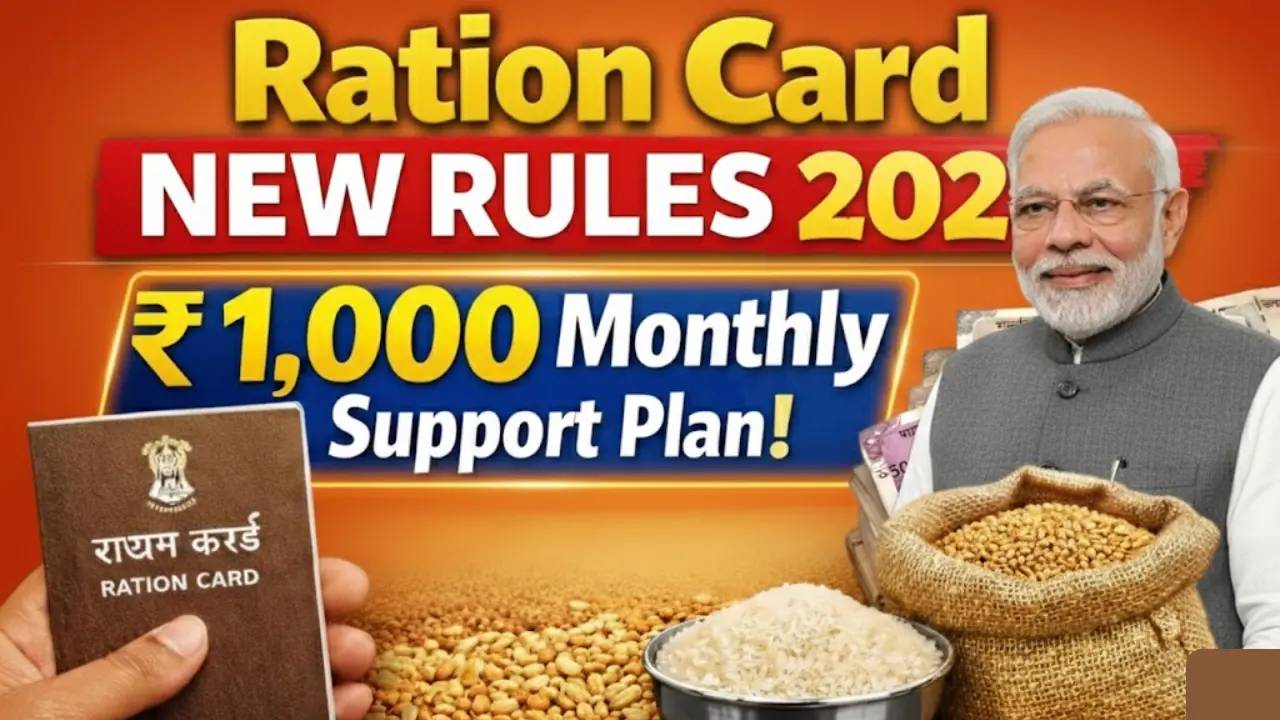
Ration Card India’s free ration system in 2026 is seeing major improvements aimed at making food distribution more transparent, digital, and fair for genuine beneficiaries. The government has introduced several new rules to reduce fraud, improve verification, and ensure that low-income families continue receiving essential food support without interruption. For millions of ration card holders, these changes are important because ration benefits directly affect monthly household survival and budgeting. Understanding the latest rules helps families stay eligible and avoid accidental removal from the beneficiary list.
Ration Card 2026 – Key Information Table
| Feature | Details |
|---|---|
| Main Change | 8 New Digital & Transparency Rules |
| Verification | Aadhaar Biometric / Face Scan |
| Financial Aid | DBT in Selected States |
| LPG Support | Subsidy or Refund in Bank |
| Ineligible Groups | High Income, Govt Employees, Large Assets |
| Food Items | Wheat, Rice, Fortified Rice, Salt, Sugar, Millets |
| Portability | One Nation One Ration Card Active |
| Digital Access | DigiLocker & Govt Apps |
| Monitoring | SMS Alerts & Smart Tracking |
Mandatory Digital Verification
One of the biggest updates is compulsory digital identity verification for all ration card holders. Beneficiaries are required to complete Aadhaar-based biometric verification at their nearest fair price shop within the announced deadline. If verification is not completed, the ration card may be temporarily blocked or removed from the active list. This rule is introduced to stop duplicate cards and fake entries so that only real and eligible families receive benefits. The process usually includes fingerprint or iris scanning using electronic point-of-sale machines installed at ration shops.
Also Read



Extra Financial Assistance with Free Ration
Apart from free wheat and rice, some states have started giving small financial support directly into beneficiaries’ bank accounts through Direct Benefit Transfer (DBT). This money helps families buy essential groceries like pulses, oil, spices, and vegetables which are not always available through ration shops. The purpose is to improve overall food security rather than just grain distribution. Although this benefit is not uniform across all states, it is gradually expanding and helping economically weaker households manage rising living costs.
Facial Recognition Technology for Easy Access
Many elderly citizens and daily wage workers face problems with fingerprint verification because their fingerprints often fail to match biometric machines. To solve this issue, facial recognition technology is being introduced in selected areas. Beneficiaries can verify their identity through a face scan, making the system more inclusive and reducing rejection errors. This step ensures that no eligible person is denied ration due to technical difficulties and makes the system more user-friendly.
LPG Subsidy and Clean Cooking Support
Eligible ration card holders may also receive LPG cylinder subsidies or refunds credited directly into their bank accounts. Instead of giving free cylinders physically, the government provides financial support after purchase. Linking the ration card with the LPG connection is necessary to receive this benefit. The goal is to promote clean cooking fuel usage, reduce indoor pollution, and improve family health, especially for women and children who spend more time in kitchens.
Strict Action Against Ineligible Card Holders
Authorities are now using smart software systems to identify individuals who are not eligible for free ration benefits. People paying income tax, owning large properties, or holding government jobs may be automatically flagged. If misuse is found, ration cards can be cancelled and penalties may apply. Income limits are also checked to ensure that subsidies reach only families who genuinely need assistance. This strictness helps maintain fairness and protects public resources.
Better Quality and Variety of Food Items
The ration system is no longer limited to wheat and rice only. Many states have started distributing fortified rice enriched with vitamins and minerals to improve nutrition. Iodized salt, subsidized sugar, and nutritious millets such as ragi, jowar, and bajra are also being added in some regions. This shift shows a focus on health and balanced diets rather than only calorie supply, which is especially beneficial for children and elderly beneficiaries.
One Nation One Ration Card Strengthened
The One Nation One Ration Card facility has been further strengthened, allowing beneficiaries to collect ration from any state in India. This is extremely useful for migrant workers who move to other cities for employment. There is no need for a new application; only Aadhaar linking is required. This portability ensures uninterrupted food access regardless of location and reduces dependency on the home state.
Digital Ration Cards and Smart Monitoring
Under the Digital India initiative, ration cards are now available in digital format through government apps and DigiLocker. Beneficiaries can show the digital card instead of carrying a physical copy. SMS alerts are also being introduced to inform families about ration allocation and collection dates. This smart monitoring increases transparency, prevents fraud, and gives beneficiaries better control over their entitlements.