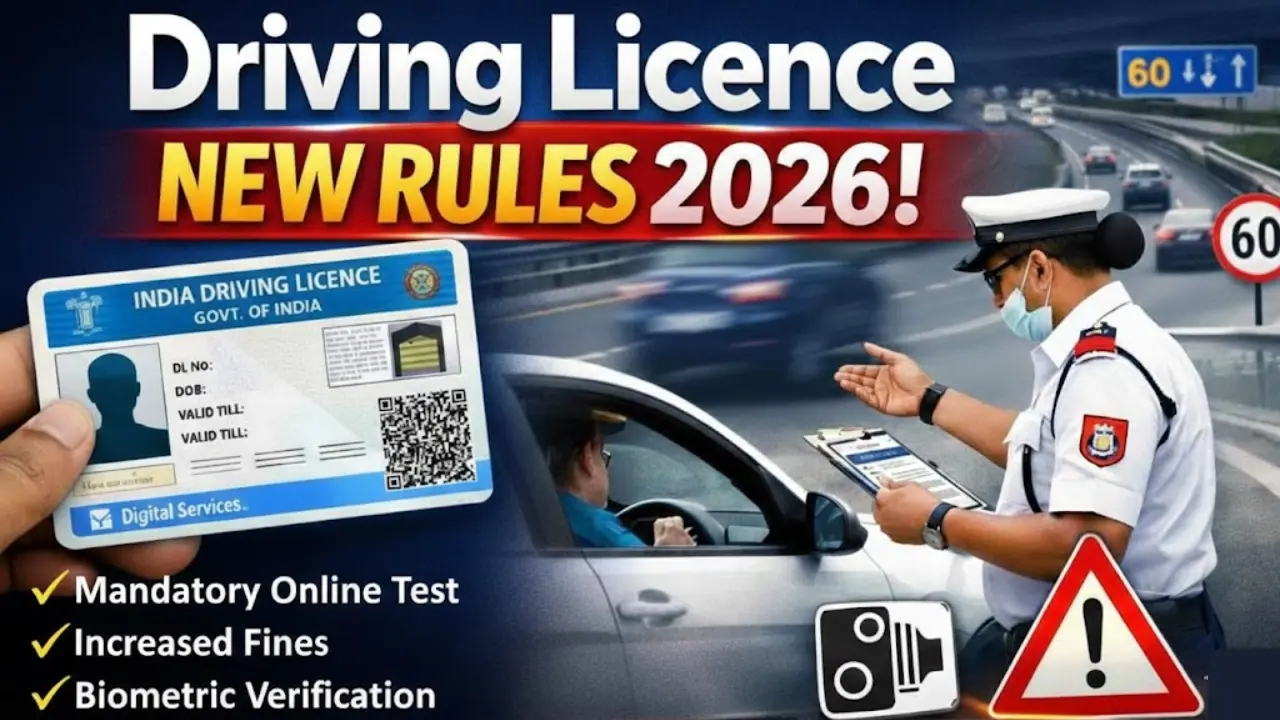
Driving Licence Rules In 2026, important updates have been introduced to the driving licence system across India with the goal of improving road safety and making licensing services more transparent and efficient. The growing number of vehicles and increasing traffic violations highlighted the need for stricter monitoring and better verification methods. At the same time, authorities also recognized that citizens needed faster and more convenient services. As a result, the new rules combine discipline with digital convenience, aiming to reduce fake licences, promote responsible driving behaviour, and make official procedures simpler for both new applicants and existing licence holders. These changes are not only about penalties but also about encouraging a culture of accountability and safety on the roads.
Driving Licence Rules 2026 – Full Information Table
| Category | Details |
|---|---|
| Main Objective | Road Safety & Transparent Licensing |
| Affected Groups | New Applicants, Existing Drivers, Driving Schools |
| Violation Rule | Licence Suspension After Multiple Offences |
| Digital Licence | Mobile Storage & Online Verification Allowed |
| Online Services | Application, Renewal, Updates from Home |
| Medical Requirement | Age Threshold Likely Increased |
| Driving Tests | Automated & Camera-Based Evaluation |
| Driving Schools | Mandatory Digital Compliance |
| Verification System | Stronger Identity & Document Checks |
| Overall Benefit | Safer Roads and Faster Services |
Key Structural Changes in the Licensing System
The revised framework focuses on stronger documentation checks, improved testing standards, and a digital-first approach for most services. Applicants are now expected to follow updated verification procedures, ensuring that only trained and qualified drivers receive licences. Online systems have been expanded so that many services such as applications, renewals, and updates can be completed without visiting government offices. This reduces long queues, paperwork, and delays while also minimizing the risk of corruption or middlemen. The emphasis is on creating a transparent system where every record is traceable and secure, helping build long-term trust in the licensing process.
Also Read



Stricter Action for Repeated Traffic Violations
One of the most impactful aspects of the 2026 rules is the stricter approach toward repeat offenders. Drivers who break traffic rules multiple times within a single year may face temporary suspension of their driving licence. This measure is designed to discourage careless habits such as speeding, signal jumping, or ignoring safety regulations. Even small violations, when repeated, can accumulate and lead to serious consequences. The purpose is not punishment alone but behavioural correction, ensuring that drivers understand the importance of discipline and responsibility while using public roads. Safer driving habits ultimately benefit everyone, from pedestrians to daily commuters.
Expansion of Digital Driving Licence and Online Services
Digital transformation plays a major role in the updated rules. Drivers are now encouraged to store and present their licences through secure mobile applications instead of carrying physical documents everywhere. This digital shift makes document verification quicker during traffic checks and reduces the risk of loss or damage. In addition, online portals now allow citizens to apply for new licences, schedule tests, renew expired cards, and update personal information from home. This convenience saves time and travel costs while also improving administrative efficiency. Digital records also help authorities maintain accurate databases and detect irregularities more effectively.
Changes in Medical and Age-Related Requirements
Another discussion within the 2026 update involves adjustments to medical certificate requirements for licence renewal. Previously, many drivers were required to submit health certificates at relatively earlier ages, which sometimes created inconvenience. The new consideration suggests increasing the age threshold so that middle-aged drivers face fewer procedural steps while senior citizens still undergo necessary fitness checks. This balanced approach ensures that convenience does not compromise road safety. Health evaluations remain important for elderly drivers, as physical and visual fitness directly influence driving ability and public safety.
Modernized Driving Tests and Training Standards
Driving tests are becoming more technology-driven with the introduction of automated tracks, camera monitoring, and sensor-based assessments. These methods aim to reduce human bias and ensure fair evaluation of every applicant’s skills. Learners trained at certified driving schools may also receive streamlined testing benefits, provided their training records are officially verified. This encourages quality instruction and professional training rather than informal or incomplete learning. By improving testing accuracy and training standards, authorities hope to ensure that only capable drivers receive licences, which contributes directly to reducing accidents and traffic risks.
New Compliance Rules for Driving Schools
Driving schools now operate under stricter compliance requirements, including mandatory digital registration and uploading of training data to official systems. This ensures transparency in how learners are trained and certified. Schools that fail to meet these standards may face penalties or loss of authorization. The intention is to create a reliable learning environment where aspiring drivers receive proper theoretical knowledge and practical guidance before entering public roads. A well-regulated training ecosystem strengthens the entire licensing structure and promotes responsible driving culture nationwide.
Stronger Verification to Prevent Fake Licences
To address the long-standing issue of counterfeit or illegally obtained licences, enhanced identity verification and document authentication measures have been introduced. Digital tracking, biometric checks, and centralized data systems help authorities confirm the authenticity of applicants. These steps reduce the chances of untrained individuals obtaining licences through fraudulent means. Strong verification not only protects the integrity of the licensing system but also improves public safety by ensuring that every licensed driver has met the required standards of competence and responsibility.