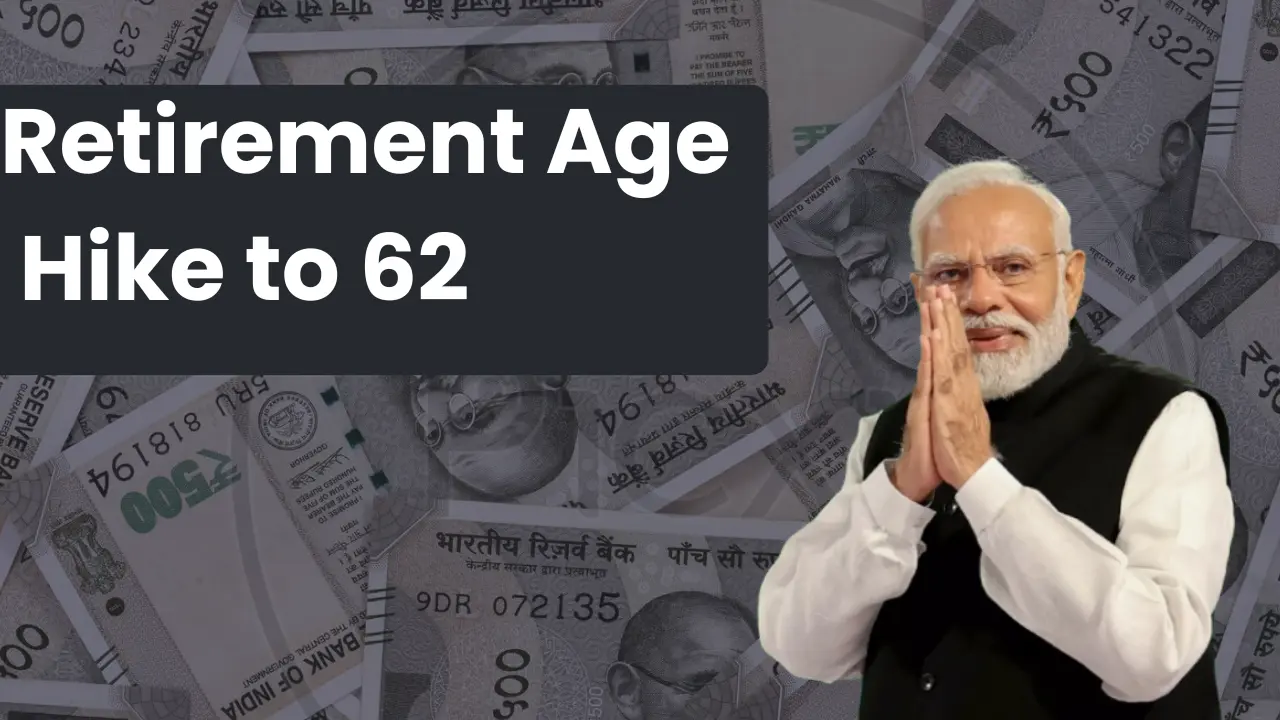
Retirement Age A major administrative decision to raise the retirement age of central government employees from 60 to 62 has introduced a significant shift in India’s public service structure. This change is more than a routine rule update; it affects employment stability, departmental planning, and long-term financial security for millions of families connected to government service. For decades, the age of 60 had remained the standard retirement point despite improvements in healthcare, life expectancy, and professional capability. The revised limit reflects a broader recognition that many employees remain productive and experienced well beyond the earlier benchmark. The policy is being viewed as a step toward continuity and stability rather than simply an extension of service years.
Retirement Age Hike – Key Information Table
| Category | Update |
|---|---|
| Previous Retirement Age | 60 Years |
| New Retirement Age | 62 Years |
| Primary Beneficiaries | Employees near retirement |
| Promotion Impact | Possible temporary slowdown |
| Financial Effect | Delayed pension payouts |
| Administrative Benefit | Greater continuity & experience retention |
| Policy Trend | Alignment with longer working life norms |
Why the Retirement Age Debate Returned
The discussion about extending retirement age has surfaced multiple times over the last decade, but earlier proposals often faced resistance due to concerns about youth employment and limited promotion opportunities. The present situation, however, differs considerably. Many government departments have been operating with staff shortages, delayed recruitment processes, and increasing workloads. At the same time, government programs have become more technologically complex and require experienced leadership. Policymakers now see the extension as a practical response to administrative gaps and evolving workforce demands rather than a temporary adjustment. The global trend of longer working lives has also influenced this decision, making the new retirement age appear aligned with international employment patterns.
Also Read



Immediate Benefits for Employees Near Retirement
Employees who were approaching retirement within the next two years stand to benefit the most from this decision. The extension provides continued income, additional time to strengthen savings, and extended contributions toward pension and gratuity benefits. For many households, this extra period of employment offers financial breathing space, particularly at a time when inflation and healthcare costs are rising steadily. Beyond financial aspects, the move also brings psychological reassurance to employees who may have felt unprepared for sudden retirement. The added two years can help individuals plan investments, settle loans, and organize post-retirement goals more comfortably.
Impact on Promotions and Career Progression
While senior employees gain extended service time, the decision also introduces temporary challenges for younger staff. Promotion cycles may slow because higher-level positions will remain occupied for a longer period. This could lead to short-term stagnation in hierarchical departments where career progression depends heavily on vacancies created by retirements. However, administrative bodies are expected to revise succession planning strategies to balance experience retention with career growth opportunities. Over time, structured recruitment drives and internal assessments may help reduce potential bottlenecks and maintain morale among junior officers.
Economic and Administrative Implications
From a financial standpoint, the retirement age increase brings both expenditure and savings. On one hand, the government will continue paying salaries for an additional two years to thousands of employees. On the other hand, pension payouts will be deferred, easing immediate pressure on public pension funds. Administratively, continuity is considered the biggest advantage. Long-term infrastructure projects, welfare schemes, and policy reforms often span several years, and frequent leadership changes can disrupt progress. Retaining experienced officers helps maintain institutional memory, reduces training costs, and ensures smoother policy execution without repeated transition phases.
Expert Opinions and Future Possibilities
Public administration specialists view this reform as part of a broader modernization of employment norms. Many experts argue that professional productivity no longer declines sharply at 60, especially in roles that rely on expertise rather than physical labor. The decision is also seen as a response to demographic changes and improvements in health standards. Looking ahead, attention will shift toward implementation guidelines, departmental coverage, and transitional provisions. There is also speculation that state governments may consider similar revisions depending on financial capacity and administrative needs. The long-term success of this change will largely depend on how effectively workforce balance and recruitment cycles are managed.
Public Reaction and Policy Discussion
Among employees, reactions have generally been positive, especially from those nearing retirement who view the extension as recognition of their experience and dedication. Employee associations, however, continue to emphasize the importance of protecting opportunities for younger staff through timely recruitment and promotion planning. In the wider policy conversation, the retirement age hike has reopened discussions about aligning employment structures with India’s changing demographic realities. As life expectancy increases and job roles become more knowledge-driven, such adjustments may become part of an ongoing reform process rather than a one-time decision.
Final Thoughts
The decision to raise the retirement age to 62 represents a structural shift in public employment strategy rather than a simple numerical change. It aims to balance experience, financial security, and administrative stability while addressing staff shortages and evolving policy demands. Although it introduces short-term challenges in promotion cycles, the long-term benefits may include stronger institutional memory and smoother governance. For employees and policymakers alike, the focus now lies on careful implementation and maintaining fairness across all age groups in the workforce.